September 22, 2026·Reports
Why no single rail can carry cross-border payments anymore
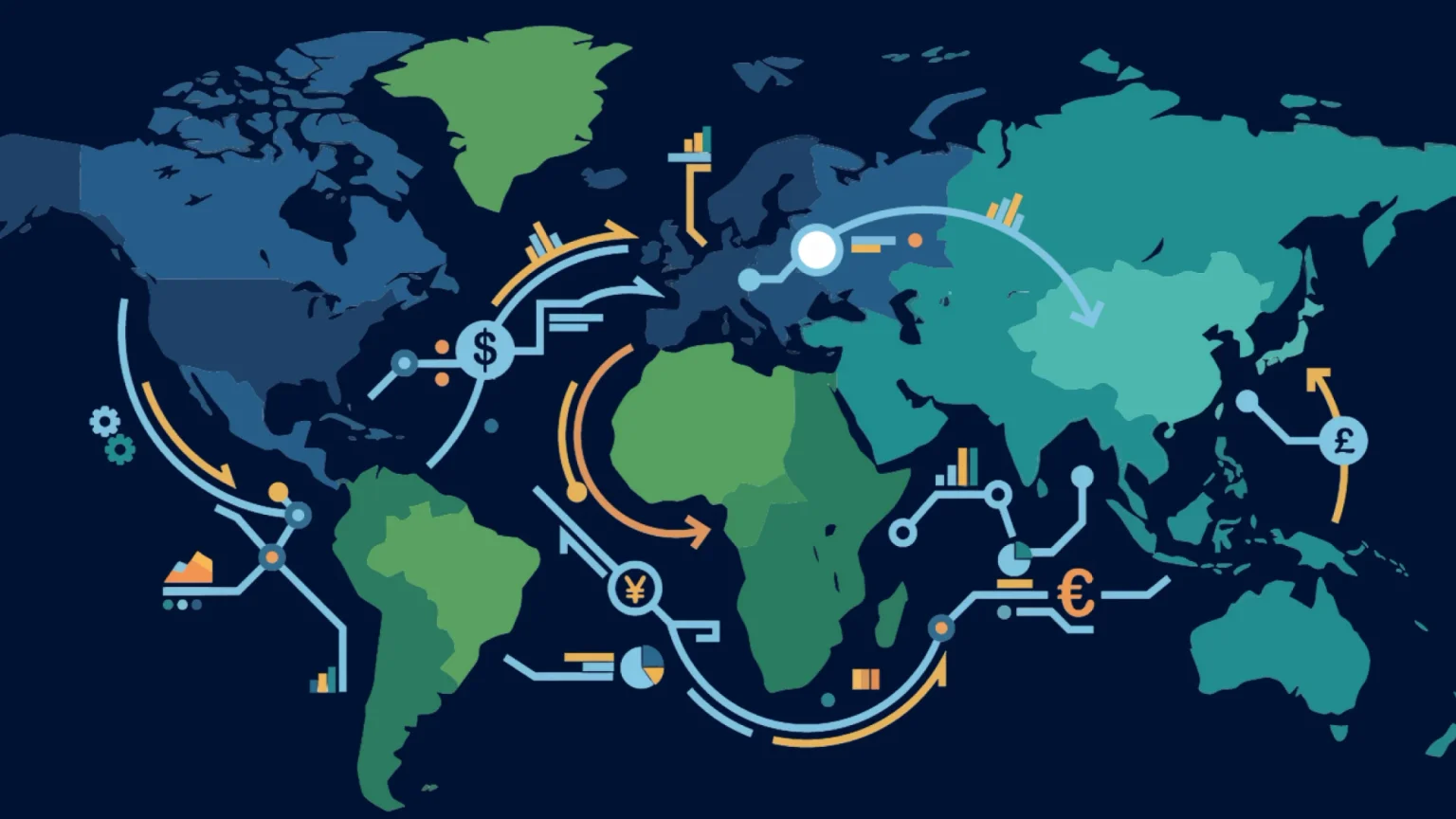
For the customer, it's just a few clicks. For the architects of a single cross-border transaction, it can be any combination of sender banks, payment providers, foreign-exchange partners, mobile wallets, recipient institutions, and real-time payment networks.
Each rail comes with its own layers of complexity, demanding routing, validation, compliance, settlement, and exception management, each of which must respond to local regulations. Yet, today's consumers expect international money movement to be as seamless as ordering food or watching a TV show.
So how can payment providers respond to this fast-paced innovation without needing to continually rebuild the infrastructure beneath every payment?
We propose some solutions in our white paper, "The interoperability imperative: Building the next generation of cross-border payments." Produced in collaboration with The Payments Association, the report draws on interviews with senior payments leaders and a survey of 75 payments professionals conducted by Opinium.
Key takeaways
- No single payment rail reaches every destination: of 54 fast payment systems the BIS analyzed, only 37% could receive cross-border payments and 30% could send them.
- Intelligent interoperability coordinates multiple infrastructures through one integration, rather than chasing endpoints one bilateral connection at a time.
- Customer expectations are set by digital wallets, which drive 50% of global e-commerce value and 30% of point-of-sale spend.
- Operational challenges tie three ways — local rail connectivity, regulatory compliance, and FX management at 31% each — so no single fix resolves them.
- No modernization capability commands a majority, which favors a partner delivering compliance, routing, pre-validation, and orchestration as one system.
But, what is intelligent interoperability?
We define intelligent interoperability as the ability to coordinate different payment infrastructures so that providers can select and manage the capabilities required for each transaction while insulating customers from the complexity behind it.
This is a different model from what we have long understood as connectivity, which is a never-ending race for endpoints. Instead, the focus shifts to redefining capabilities, partnerships, and operating models so that they can respond with agility to an evolving payments landscape.
Why isn't a single payment rail enough anymore?
For years, the payments industry has focused its energy on modernization and chasing the dream of a single-rail solution, all while even greater diversity has emerged through expanded real-time payment systems, digital wallets, and new settlement and liquidity options like stablecoins.
And that's without factoring in the sheer volume of cross-border payments. In 2023 alone, the global payments industry processed 3.4 trillion transactions worth US$1.8 quadrillion, generating US$2.4 trillion in revenue, according to McKinsey's Global payments in 2024: Simpler interfaces, complex reality.
Yet reach hasn't kept pace with volume. The Bank for International Settlements analyzed 54 of the 88 fast payment systems operating globally by the end of 2024 and found that, of those 54, only 37% could receive cross-border payments and 30% could send them (Enhancing cross-border payments: fast payment system interlinking, February 2026). And that's not because of a lack of standardization. In fact, ISO 20022 has already been adopted by market infrastructures in more than 70 countries and 70% of the BIS-analyzed systems.
What's driving the shift in customer expectations?
A key reason why a single rail can't answer all cross-border payment needs is that customer expectations are vast and varied. Based on our survey, we found that customer experience (51%), real-time capabilities (41%), transparency and reliability (39%), and faster settlement (36%) are all areas of focus reported by payment professionals. These priorities are based on the consumer expectations businesses believe they need to respond to.
Beyond the rest of the modern conveniences customers have grown used to, digital wallets have also become a reference point to measure against within the finance ecosystem as they drive 50% of global e-commerce value and 30% of point-of-sale spend, per Worldpay's Global Payments Report 2024.
This is something that Nicolás del Águila Bonifaz, Business Development and Strategic Partnerships Manager at Yape, sees happening in Peru. Users increasingly expect cross-border payments to feel no different from the domestic payments they already make through digital wallets. For customers, the distinction between local and international infrastructure matters far less than whether the experience remains fast, simple and transparent.
What are the biggest operational challenges in cross-border payments?
The same fragmented tune plays for operational challenges as it does for expectations. Getting the job done is not as simple as flipping on a switch. Instead, we found a three-way statistical tie between needing to connect to local payment rails, regulatory compliance, and FX management (31% each), with operational complexity (29%) and network coverage (27%) trailing closely behind.
In essence, "all of the above" could have been a better fit when choosing between challenges faced. And because these complexities are turning infrastructure upkeep into a significant undertaking, David Edgar Rego, Global Head of Core and Foundational Payments at Standard Chartered, sees the industry moving away from bilateral approaches towards network providers that can offer broader connectivity through a single relationship.
What capabilities matter most for cross-border payment outcomes?
So, let's talk solutions. Payment leaders have identified compliance tools (37%), intelligent routing (33%), pre-validation (27%), local payment method access (25%), and multi-rail orchestration (20%) as the primary capabilities needed to modernize their existing infrastructure, yet not a single capability commands a majority.
While the list of to-dos is broad enough to overwhelm any payments expert, the right interoperability partner can turn that list into a coordinated system.
How does intelligent interoperability work in practice?
Hanif Dharamsi, Global Head & Director of Market Development at Xoom, a PayPal service, describes intelligent interoperability as a shift away from building individual payment corridors towards creating a "network of networks", spanning bank rails, real-time payment systems, card networks, mobile wallets, and cash pickup networks.
In-house, Cecilia Tamez, Chief Strategy Officer and Head of Data Science for Euronet's Cross-Border Payments Segment, would define it as "the ability to orchestrate multiple payment rails through one integration…[with] more dynamic validation and routing." At its core, intelligent interoperability is about accommodating the variations between rails without the need to constantly build bilateral integrations for every endpoint.
Pre-validation is a clear example of how interoperability can improve payment outcomes. As David Edgar Rego explains, checking payment information before processing can reduce payment failures, improve straight-through processing, and limit requests for information caused by missing or incorrect data. However, the greatest challenge is that these capabilities do not operate uniformly across markets. This is where an intelligent interoperability partner comes in, enabling pre-validation that adapts to each new market's requirements.
What role will emerging technology play?
As rapid changes in the industry have become table stakes, our white paper also deep dives into stablecoins, AI and automation, and the future of real-time payments in a world that's perhaps further away from a universal interoperable global network than initially believed.
At the same time, we provide real-world examples of how intelligent interoperability is helping payment providers expand their reach and improve their offering without disrupting customer experience.
You can read more on what payment leaders have to say on emerging technology and our proposed solutions in "The interoperability imperative: Building the next generation of cross-border payments" today.
FAQs
About the author

Gabrielle van Welie
Gabrielle van Welie is Dandelion Payments' Global Content Manager and an expert in thought leadership for the cross-border payments industry. Originally from the Dominican Republic, she specializes in financial inclusion and the impact of remittances and migration across the globe.